
A Forge Futures Case Study
Before the school day even begins, Charlie is already at work.
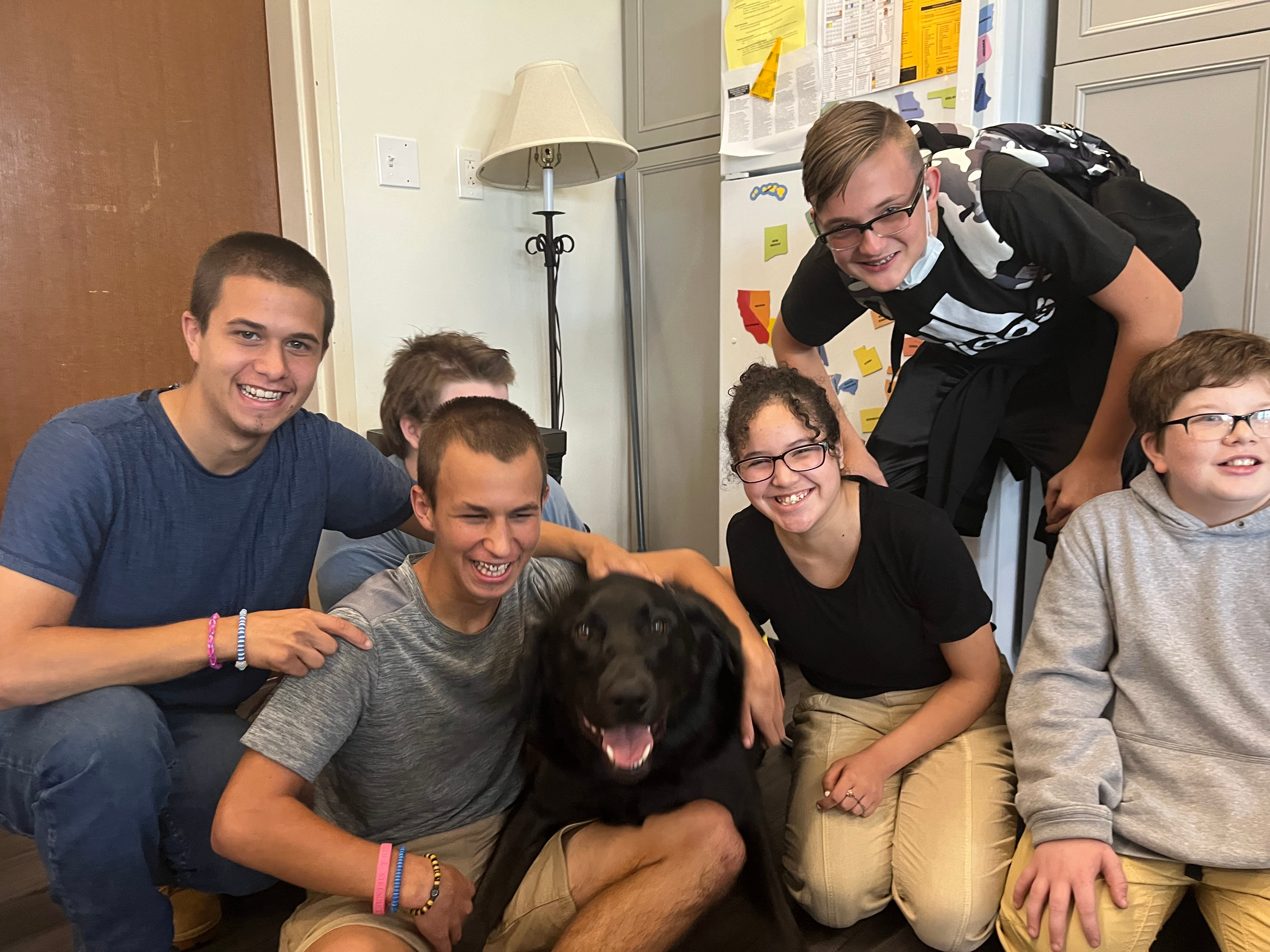
Charlie, one of twelve certified therapy dogs at California Area School District, stands beside Secondary School Principal Josh Pollock greeting students as they arrive. Some kneel to pet him before heading inside. Others pause to talk with friends or staff before classes start. What began as a small initiative tied to a summer camp has become part of the daily rhythm of the school.
At California Area High School (CAHS), learning does not begin and end at the classroom door. In the veterinary technology program, students work with live animals as they practice animal care, medical procedures, and diagnostics under the guidance of a practitioner from the community. Beyond the building, students lace up their skates to earn physical education credit on the district’s outdoor rink, while other experiences connect them to local organizations, fire departments, and community spaces that become part of the learning environment.
Across the school, students move between classrooms, outdoor spaces, and community-based experiences that broaden both what counts as learning and who contributes to it. Some of these opportunities unfold during the school day, others beyond it, but together they reflect a model that draws on local assets and relationships to make learning more relevant and more connected to the world students inhabit.
At CAHS, these experiences are not merely extracurricular additions to education. They are woven into the structure of the school itself. By expanding where, when, and with whom learning happens, the district has created a model in which school is not confined to a single place or schedule.
California Area High School is a small rural school in southwestern Pennsylvania serving just over 450 students. Like many rural communities, the school sits at the center of civic life. Families know each other. Teachers often grew up nearby. Community organizations and local businesses play a visible role in students’ lives.
For years, students at CAHS were already learning through these community experiences. They volunteered with fire departments, worked in local businesses, helped with family enterprises, and participated in community organizations. These experiences built responsibility, technical skills, and leadership—but they rarely showed up anywhere in the formal structures of school.
At the same time, district leaders began noticing that the traditional structure of the school day was not always capturing the kinds of learning students needed most. Courses were organized around long-standing models—seat time, subject silos, and classroom instruction—even as the world students were preparing to enter demanded collaboration, problem-solving, and real-world application.
Leaders began asking a broader question: What if learning itself looked different—both within our school as well as beyond it?
This case study builds off the findings of Forge Futures, a national summit on the future of learning hosted in spring 2024 by Remake Learning and AASA, and illustrates one of its core features: School Unwalled. Forge Futures calls on learning systems to expand learning beyond the boundaries of the school building and the school day, leveraging community assets and real-world experiences to create richer opportunities for students.
CAHS offers a vivid example of what this shift can look like in practice: a school where learning extends across classrooms, community spaces, and authentic experiences that help students see themselves—and their futures—in new ways.
A Vision for Boundless Schooling
As leaders at CAHS began thinking differently about where learning happens, they also began thinking differently about how learning should be recognized.
For generations, schools have been organized around a familiar structure: students move through a sequence of courses, learning happens primarily within classrooms, and the school day defines the primary boundaries of education. While that model has long shaped how schools operate, district leaders increasingly recognized that it did not reflect the full range of experiences that were helping students grow.
Students were developing skills through hands-on technical courses, community partnerships, leadership experiences, and applied learning opportunities. At the same time, teachers were exploring ways to make learning during the school day more collaborative, experiential, and connected to real-world problems.
In other words, learning was already happening in many places and formats—inside classrooms, across the school building, and throughout the surrounding community.
The challenge was not simply to add new programs, but to adopt a broader vision for what school could be. That vision took shape through the CAHS’s concept of the Village Transcript.
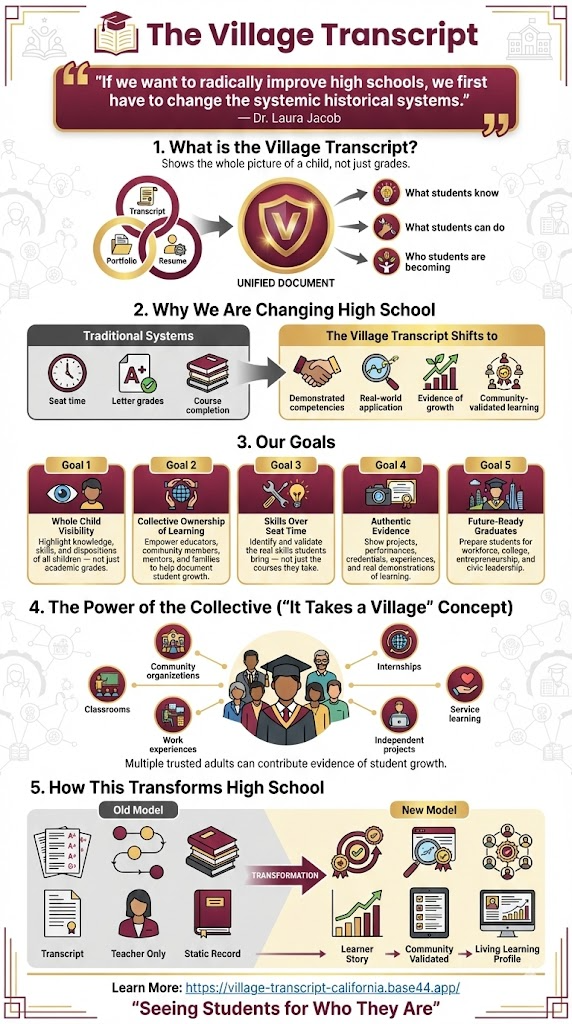
Rather than thinking about a transcript only as a document that records courses and grades, CAHS uses the idea of the Village Transcript to frame how learning happens across a network of people, experiences, and settings. The concept reflects a belief that educating young people is not the work of a single institution, but of an entire community.
“If I were to encapsulate it as a simplified statement, it is both a résumé, a portfolio, and a transcript together, but it allows anyone within the community to contribute to the knowledge, skills, and dispositions that that child has. So it's showing the whole child, not just their grades.” -Dr. Laura Jacob
The Village Transcript provides a way of thinking about learning that reflects this broader ecosystem. It highlights the idea that meaningful learning can happen in many contexts: through meaningful applied learning opportunities before, during or after the traditional school day, and through experiences that connect students with the wider community. Students’ development is supported by a wide range of educators—teachers, community partners, mentors, employers, and families—each contributing to the knowledge, skills, and dispositions that shape a young person’s growth.
At CAHS, this vision shows up most clearly in the way learning experiences have expanded both during the school day and beyond it, creating opportunities that connect classroom learning with real-world application and community engagement.
School Unwalled in Practice: During the School Day
Expanding Who Teaches and What Expertise Counts
As the school and district began recognizing learning beyond traditional coursework, it also expanded who contributes to that learning.
When CAHS launched its Veterinary Technology program, leaders chose not to assign it to an existing teacher. Instead, they hired a practitioner from the community—an approach that reflects the district’s broader effort to recognize learning that happens with experts beyond traditional classrooms.“They pulled someone from the community who isn’t a teacher,” the instructor explains. “I’m able to teach the kids what I know, because I’m an industry expert.”
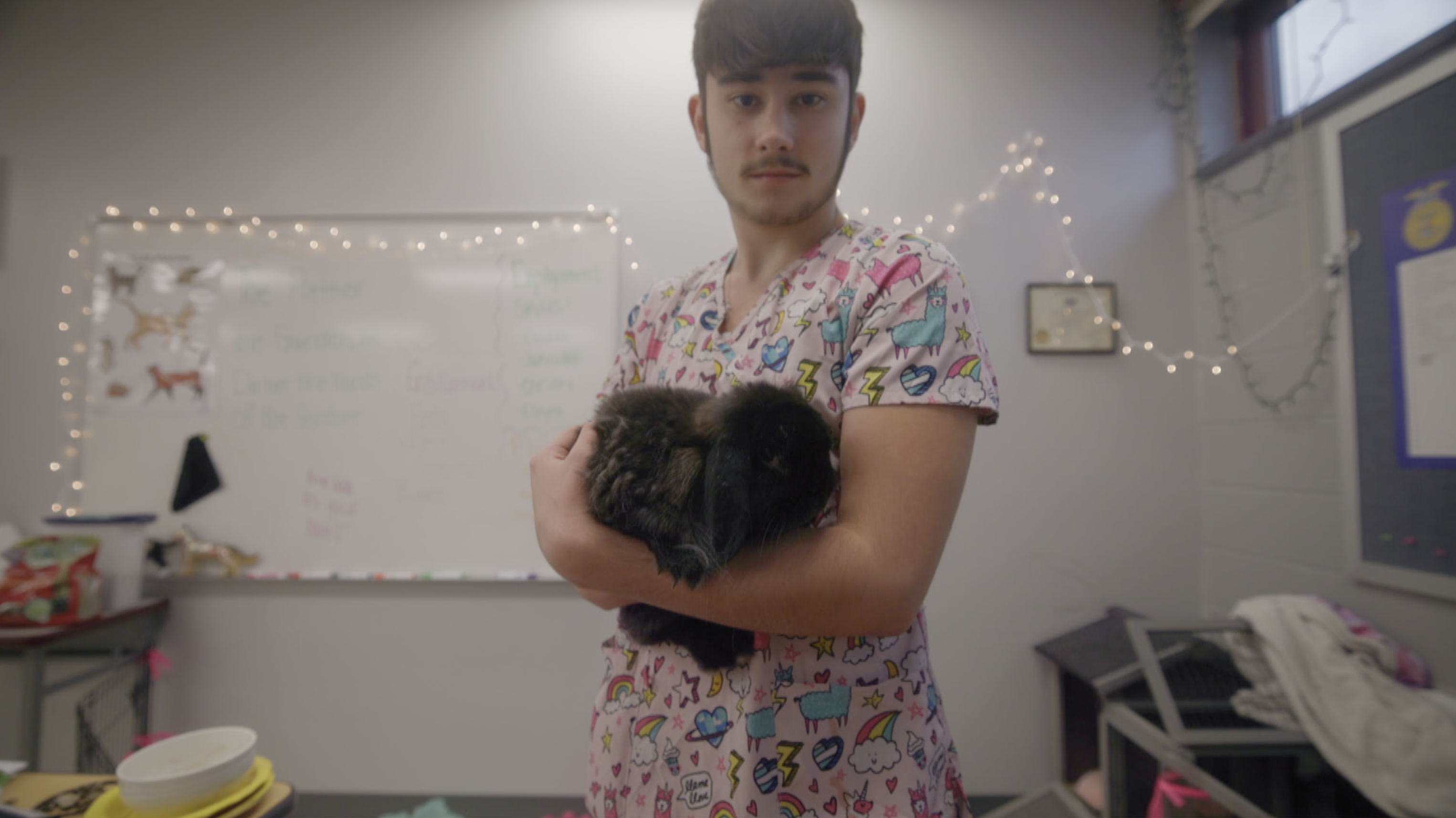
The program grew quickly. What began as a part-time position evolved into a full-time role as student interest surged. In the classroom, students vaccinate animals, conduct live labs, and calculate medication dosages in applied scenarios where algebra and biology become tools tied to real-world consequences.
“My kids that I have in my vet tech program… they’re succeeding. And I’m actually seeing them doing better on their math tests because they finally understand that x has a meaning.”
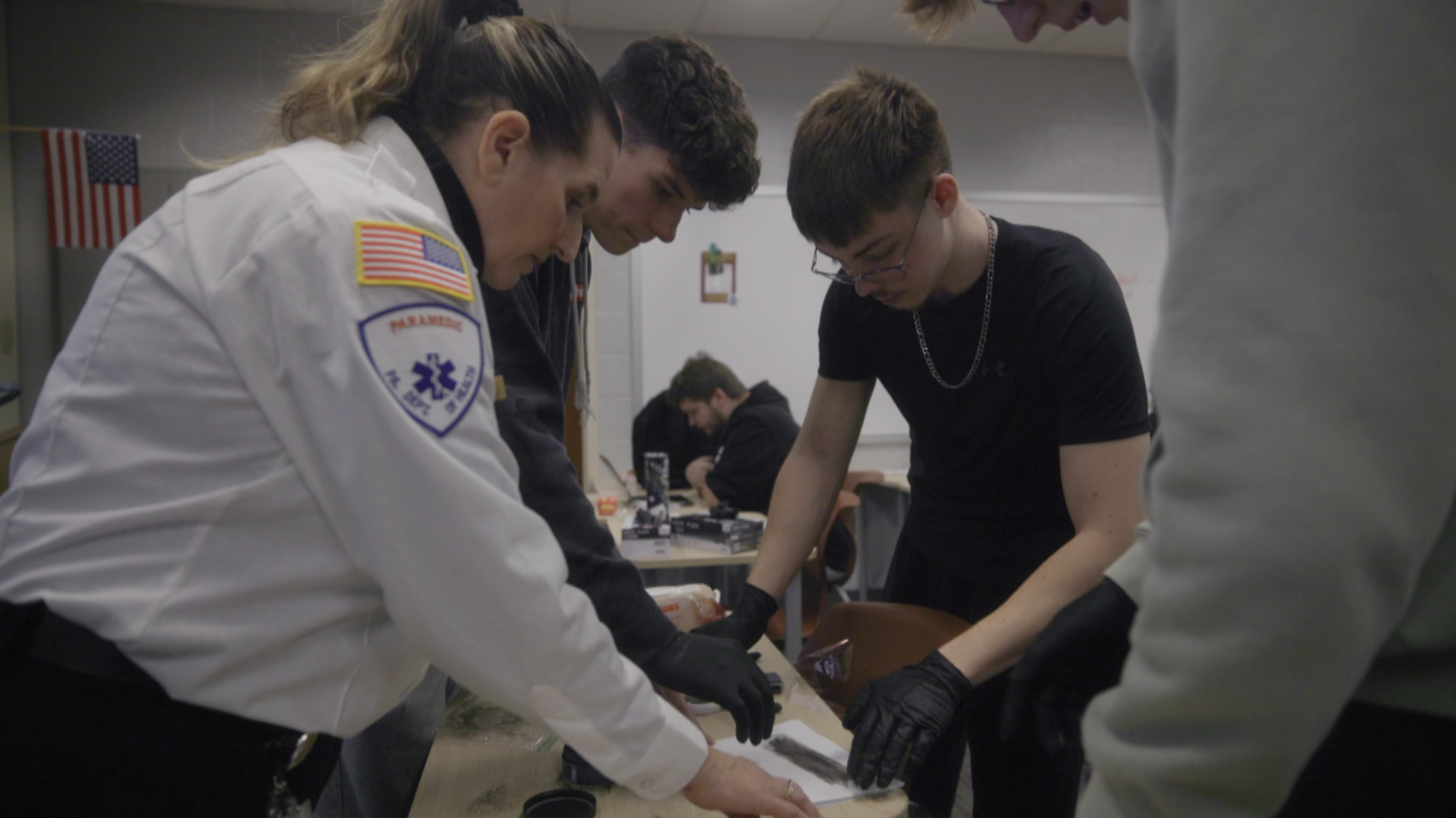
Similarly, Homeland Security courses connect students with professionals in policing, fire services, emergency medical response, and crime scene investigation. Students practice skills such as fingerprint analysis and emergency response procedures while learning from professionals who bring real-world expertise directly into the classroom.
In these classes, expertise from the surrounding community becomes part of everyday instruction, allowing students to experience how academic concepts translate into real-world practice.
Expanding Where and How Students Learn
Learning during the school day also extends beyond conventional classroom spaces.
For example, Travel Literacy, a credit-bearing course developed by a Spanish teacher, prepares students to navigate global systems and cultural contexts.“Instead of just sitting in a classroom writing down answers,” she explains, students explore how the world functions and how they might move within it.
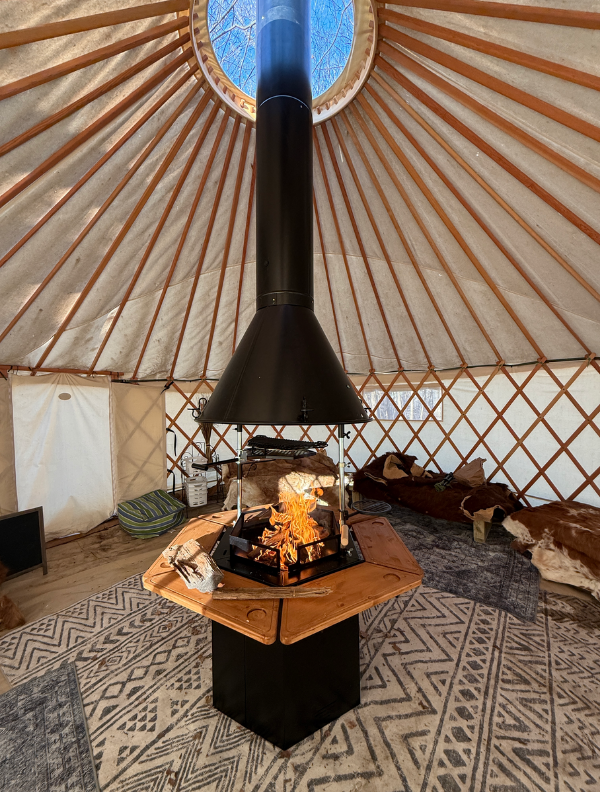
The Outdoor Leadership program, based in a yurt on campus, provides a pathway for students who might otherwise face extended suspension. Embracing a more restorative model, CAHS blends online coursework with outdoor leadership development and hands-on learning experiences. Other teachers also take advantage of the yurt to get students outside and learning in spaces they otherwise might not have.
Seniors also participate in work labs and internships embedded directly into their schedules, gaining experience with local employers and organizations. Students meet individually with counselors to map pathways aligned with their interests while accessing internships, dual enrollment courses, and other applied learning opportunities.
What once required special arrangements is now built into the school experience.
School Unwalled in Practice: Beyond the School Day
In addition to removing barriers to learning during the school day, CAHS is also reimagining another long-standing boundary: when learning happens.
At CAHS, meaningful learning often takes place during after school, evenings, weekends, and summers through experiences connected to students’ interests and community opportunities. Through the Village Transcript, these experiences can count toward students’ learning records and be validated not only by classroom teachers, but also by the community mentors, instructors, and professionals who guide them.
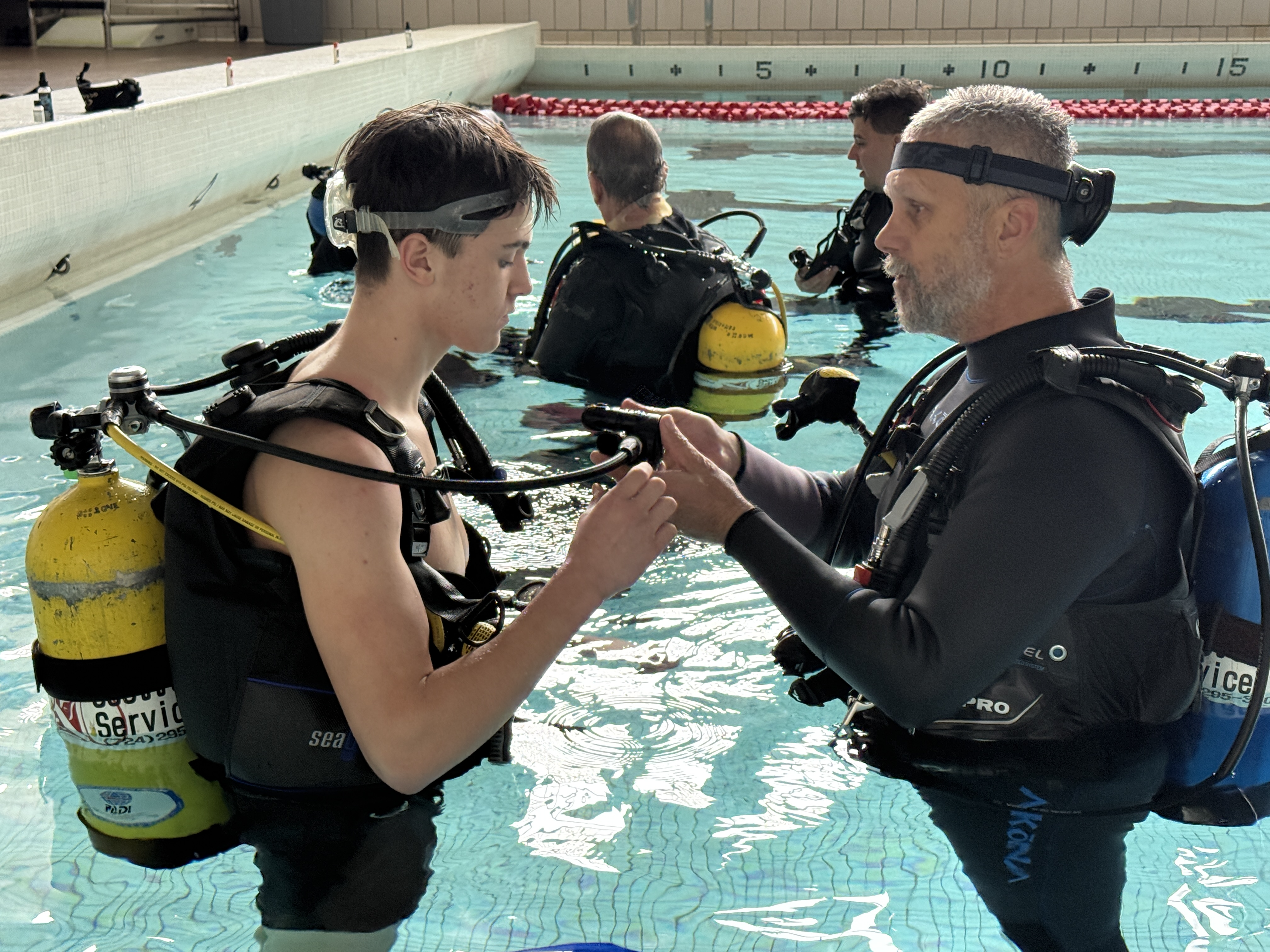
One example is the school’s scuba certification program. Students can earn their physical education credit while completing scuba training, gaining both a certification and a highly specialized skill. The program partners with a nearby university to use its pool facilities, allowing students to complete the training outside the traditional school schedule, at no additional cost, while still receiving credit toward graduation.
Students also have opportunities to extend classroom learning through international travel. New this year, students enrolled in the travel literacy course, Spanish, history, or the after-school travel club can participate in trips to France and Spain. During these visits, students engage in a short intercambio, staying with host families and attending school alongside local students for several days—an experience educators believe will profoundly expand students’ perspectives.
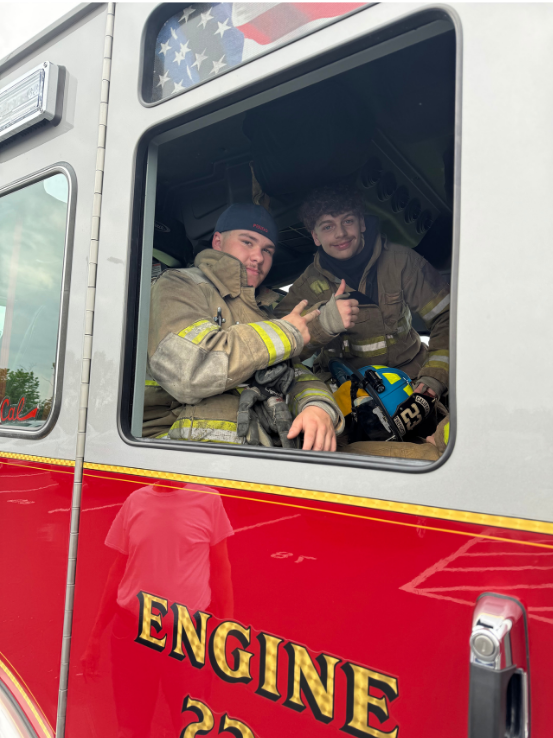
Beyond organized programs, many students are also earning recognition for the learning they pursue through community service and local involvement. For example, some receive credit for volunteering with the local fire department, others earn credit through internships in industries like welding. Rather than treating these commitments as separate from school, the school recognizes them as meaningful learning experiences that can be documented and validated as part of students’ broader educational record.
In this way, learning is shaped not only by the courses students take during the school day, but also by the people, places, and experiences they engage with beyond it.
What Happens When Students Are Not Confined by Walls
At CAHS, expanding where learning happens has changed how students experience school itself.
Students describe courses and experiences that help them see tangible futures for themselves. Programs such as Veterinary Technology and Homeland Security allow students to test career interests early, working with professionals and real-world tools rather than encountering those fields for the first time after graduation.
“I would say it has a huge impact on me, because the way the school system is I feel like I genuinely want to build a career off of what I'm learning in school. I pretty much know that I'm going to be going to college for vet tech, because I want to be a veterinary surgeon. And I'll definitely say that my vet tech classes influenced that a lot.” —Veterinary Technology Student
The changes have also reshaped how the community sees the school. Because students learn alongside local professionals, education is increasingly shared across the community rather than confined to the building.
CAHS leaders emphasize that this transformation did not happen all at once. Over the past several years they have gradually expanded programs, partnerships, and scheduling flexibility—building trust and buy-in across staff, families, and community partners before formalizing those experiences through the Village Transcript model.
The results are visible not only in expanded opportunities, but also in student outcomes. CAHS now reports a 100 percent graduation rate, a dramatic shift from just five years earlier when they were on the state’s Target Support and Improvement list as only 78.95% were graduating.
California Area leaders caution that the change did not come from introducing a single program or initiative. Instead, it emerged from a deliberate effort to rethink where learning happens, who contributes to it, and how it is recognized. Over time, that shift has reshaped both the structure of the school day and the role of the surrounding community in supporting student learning. Leaders also note that they are still in a state of growing and evolving, and always will be, to ensure they are able to “reach each and every individual student.” (Dr. Laura Jacob).
Lessons for the Field
Whats Working
California Area demonstrates how expanding the boundaries of learning can reshape both student experiences and the role of the school within its community. By drawing on local expertise the district has created learning experiences that feel authentic and connected to life beyond school. Students gain exposure to real-world environments while developing skills and interests that help them envision possible futures.
Just as importantly, the district has built structures that allow these experiences to count. Through flexible scheduling, work labs, and community-validated learning, students’ growth is recognized across settings rather than confined to traditional courses alone.
Areas for Continued Iteration
Like many ambitious redesign efforts, this work requires ongoing coordination and care. Community partnerships must be cultivated and sustained over time, with attention to the strengths and assets that already exist within the community rather than forcing misaligned opportunities. Access to these experiences must also remain equitable for all students. As programs expand, leaders continue refining how learning experiences are documented, supported, and aligned with academic goals.
Recommendations for Other Schools
CAHS’s experience suggests that unwalling school does not begin with a single program. Instead, it starts with a shift in mindset—recognizing that meaningful learning already occurs across classrooms, workplaces, community organizations, and homes.
For other schools interested in similar work, leaders emphasize the importance of starting small and building gradually. Over the past five years, CAHS has expanded opportunities step by step, developing partnerships, testing new learning experiences, and building trust across educators and community members before formalizing those experiences within broader systems.
Equally important is viewing community partners not simply as visitors to the classroom, but as contributors to the learning ecosystem itself.
From Vision to Practice: A Living Example of School Unwalled
California Area High School illustrates what becomes possible when the boundaries of school are intentionally expanded.
Here, learning is not limited to classrooms or bell schedules. It unfolds in veterinary labs, community organizations, fire departments, university pools, and international exchanges. Students learn alongside educators, industry experts, mentors, and community members who collectively contribute to their growth.
In doing so, CAHS offers a vivid example of School Unwalled in practice—a learning environment where the community becomes part of the educational ecosystem and where students encounter the world not only after graduation, but throughout their time in school.
For districts seeking to expand learning beyond traditional boundaries, CAHS provides not a model to replicate exactly, but a compelling illustration of what becomes possible when schools recognize that learning is already happening everywhere—and design systems that allow it to flourish, step by step.